Release campaign strategies to boost engagement and growth
Unlock success with proven release campaign strategies! Boost engagement and growth using measurable goals and effective rollout techniques.

TL;DR:
- Effective release campaigns utilize structured, multi-stage strategies with clear goals and visual consistency.
- Visual storytelling and layered assets significantly boost engagement, recognition, and organic sharing.
- Phased rollouts with pre-saves, targeted timing, and continuous tracking outperform single-day releases.
Every release you put out competes with thousands of others landing the same week. A single social post or one-day push rarely builds the momentum you actually need. The creators seeing real traction are running structured, multi-stage campaigns with clear goals, strong visual identities, and the data to prove what’s working. This article walks you through four tested pillars of an effective release campaign: setting measurable goals, building visual worlds that stick, timing your rollout for maximum buzz, and tracking results so each release outperforms the last.
Table of Contents
- Set clear goals and know your audience
- Build a world: Visual storytelling and layered assets
- Phased release tactics for maximum buzz
- Measure success and refine your strategy
- Why most creators overlook the power of campaign layers
- Supercharge your next campaign with Orias AI
- Frequently asked questions
Key Takeaways
| Point | Details |
|---|---|
| Set clear campaign goals | Identifying your targets and audience habits guides every release campaign decision. |
| Leverage layered visuals | Campaigns that use cinematic motifs and multimedia assets see deeper engagement and shares. |
| Use phased rollouts | Multi-stage launches with teasers and pre-saves produce higher stream counts and mailing list growth. |
| Track and adapt | Real-time data helps refine ongoing tactics and ensures your next release is even stronger. |
Set clear goals and know your audience
Every strong campaign starts with a clear answer to one question: what does success actually look like for this release? Vague intentions like “get more streams” or “grow my following” make it nearly impossible to make smart decisions mid-campaign. Specific, measurable goals give you something to optimize toward and a way to know when a tactic is or isn’t working.
There are several distinct goal types worth considering for any release:
- Stream targets: A specific number of plays within the first 7 or 30 days, ideally benchmarked against your previous release.
- Pre-save numbers: These signal audience readiness before launch day and directly affect algorithmic placement on Spotify and Apple Music.
- Email or SMS list growth: Owned audience contacts are one of the highest-value outcomes of any campaign, because you keep access to those fans regardless of platform algorithm shifts.
- Fan interactions: Comments, shares, playlist adds, and story replies are leading indicators of deeper engagement beyond passive listening.
Top artists and their teams typically define targets for each of these categories before a single piece of content goes live. They decide which two or three metrics matter most for this specific release and structure the entire campaign around moving those numbers. That kind of focus prevents you from spreading creative energy too thin.
“Phased campaigns with data-driven pre-saves outperform one-off drops; integrate email/SMS capture for owned audience growth.”
That insight points to something many creators miss: the platform you’re releasing on does not own your relationship with your fans. Every email address and phone number you collect during a campaign is an asset that stays with you. Building that list alongside your stream count is one of the smartest long-term moves you can make.
Knowing your audience shapes every decision downstream. Before building out your campaign, take a hard look at the data already available to you. Spotify for Artists, YouTube Analytics, Instagram Insights, and your email platform all tell you where your audience lives, when they’re most active, and what content they respond to. If 60% of your listeners are on mobile and active between 7 and 10pm on weekdays, that changes when you post, how long your videos should be, and what formats get priority.
Pro Tip: Map your audience’s listening platform, top geography, and peak activity window before you finalize your content calendar. Even one week of data review can shift your timing decisions in ways that noticeably move your numbers. Check out visual tips for music releases to align your audience data with a visual approach that fits their habits.
Build a world: Visual storytelling and layered assets
Once your goals are set, it’s time to bring your campaign to life visually. A release with strong visuals simply performs better. Content with visuals gets 94% more views than text-based content alone, and for music campaigns, your visual identity often reaches new listeners before your audio does.

The most effective campaigns don’t treat visuals as decorative extras. They build a coherent world around the release, using repeated motifs, color palettes, and visual themes that make every piece of content feel like it belongs to the same universe. That coherence is what drives recognition and retention. When someone sees your campaign thumbnail or your Story frame, they should know it’s yours without reading your name.
Here’s a practical comparison of the main visual asset types and where they work best:
| Asset type | Best platform | Strengths | Limitations |
|---|---|---|---|
| Static images | Instagram, Twitter/X | Fast to produce, highly shareable | Lower retention than video |
| Short-form video | TikTok, Reels, YouTube Shorts | High reach, drives audio discovery | Requires more production effort |
| Story content | Instagram, Snapchat | Immediate, interactive, ephemeral | Short shelf life |
| Infographics | Twitter/X, email, Pinterest | Informative, save-worthy | Less emotional resonance |
| Interactive content | Email, web | High engagement, data capture | Limited organic reach |
The goal isn’t to produce every format for every platform. It’s to choose the formats that match your audience’s habits and your campaign’s visual concept, then execute those well rather than spreading resources thin across everything at once.
Narrative cohesion is what separates a campaign from a content calendar. Visual storytellers who build cohesive worlds around releases using layered assets see stronger retention and more shares than those who treat each post as a standalone moment. When you define a central motif, say a recurring visual symbol, a specific color grade, or a stylistic reference, every asset you produce reinforces the story rather than starting from scratch.
Artists like Mitski have used cinematic horror motifs to create press hooks and fan-driven ARGs, alternate reality games, where fans piece together a narrative from clues, around their releases. That kind of storytelling doesn’t just generate buzz. It creates something fans want to participate in, share, and talk about long after the release date. The result is earned media coverage and organic community engagement that paid promotion often can’t replicate.
Pro Tip: Pick one visual motif before you create a single asset. It could be a film genre reference, a specific lighting style, or even a recurring object or symbol. That single decision makes every piece of creative easier to produce and instantly more cohesive. Explore innovative visual storytelling approaches that help musicians build complete campaign worlds. You can also reference a promo visuals guide for practical formatting and sizing guidance across platforms.
Phased release tactics for maximum buzz
With a standout identity in place, craft a rollout plan that builds anticipation and delivers results at each stage. The biggest mistake in release campaigns is treating the drop date as the beginning of the campaign. By launch day, your audience should already be invested. A phased rollout creates that investment deliberately.
Here’s how a structured campaign typically breaks down:
- Teaser phase, 4 to 6 weeks out: Drop visual hints, short clips, or cryptic content that signals something is coming without revealing everything. The goal here is curiosity.
- Pre-save activation, 2 to 3 weeks out: Launch your pre-save link with a clear, low-friction call to action. Pair it with an email or SMS capture mechanic, a contest, exclusive content, or early access, to build your owned list.
- Launch week: Coordinate your content surge across platforms simultaneously. This is when you release the full single, video, or project, backed by a consistent volume of posts, playlist pitches, and fan engagement.
- Post-launch storytelling, 2 to 4 weeks after: Most campaigns go quiet here. The smart move is to keep the conversation going with behind-the-scenes content, fan reactions, streaming milestone posts, and extended narrative content that rewards fans who stayed engaged.
The numbers from real campaigns show how dramatically this structure outperforms a single-day release push.
| Campaign | Pre-saves | Day 1-2 streams | List growth |
|---|---|---|---|
| Black Country, New Road | 29.2K pre-saves | 400K Spotify streams | 120% mailing list growth |
| Hozier “Too Sweet” | Not disclosed | Ongoing accumulation | Over 1B Spotify streams total |
The Black Country, New Road campaign is particularly instructive for independent creators because it demonstrates that this level of outcome is achievable without a major label infrastructure. The 120% mailing list growth is arguably the most valuable metric in that table, because it represents an owned audience that the team can reach on the next release without relying on an algorithm to deliver the message.
Phased campaigns with data-driven pre-saves consistently outperform one-off drops, and the email and SMS list captured during the campaign becomes the foundation for the next release. That compounding effect is what separates teams that grow steadily from those who spike and reset.
Fan missions are an underused tactic in the pre-save phase. Giving your audience a small, shareable task, saving the pre-release link, posting a specific visual, or tagging a friend, creates a sense of participation and multiplies your organic reach without requiring a paid media budget. Countdown timers in email campaigns add urgency that genuinely increases click-through rates in the days leading to launch. For a deeper look at structuring this kind of workflow, see creative workflow best practices that help creators manage multi-stage campaigns without burning out.
Measure success and refine your strategy
After executing your multi-stage campaign, you need to know what really worked. Measuring impact isn’t just about validating your effort. It’s the process that makes your next campaign smarter than the last one.
The key indicators to track fall into three categories:
- Streaming and audio metrics: Total streams, stream-to-listener ratio, skip rate, where available, saves, and playlist adds. Saves are especially meaningful because they signal intent to return.
- Social engagement metrics: Comments, shares, saves, platform-specific, click-through rate on links, and Story reply rate. These tell you which content formats and messages resonated most.
- Owned audience metrics: Email open rate, click rate, list growth percentage, and SMS opt-in volume. These tell you whether your campaign successfully converted attention into a lasting connection.
Successful creative teams don’t wait until the campaign is over to look at these numbers. They track daily or weekly during the campaign and make adjustments in real time. If a specific visual format outperforms others in the first week, they produce more of it. If email open rates drop after a certain subject line approach, they test something different for the next send.
“The Black Country, New Road teaser campaign yielded 400K Spotify streams in the first two days and 29.2K pre-saves, demonstrating what a well-structured rollout can achieve even for an artist outside the mainstream.”
That data point is worth studying not just for the impressive numbers, but for what it teaches about sequencing. The pre-save volume directly amplified the day-one streaming spike by creating a concentrated moment of listener activity that triggered algorithmic playlist consideration. The lesson is that these metrics don’t exist in isolation. They reinforce each other when the campaign is built to activate them together.
After the campaign closes, run a simple debrief. Compare your actual results against the targets you set at the start. Note which phase of the campaign generated the most engagement and which asset type performed above expectations. That information becomes the brief for your next release, turning each campaign into a learning loop rather than a standalone event. Building a magnetic visual identity that holds up across campaigns makes this compounding effect even more powerful over time.
Pro Tip: Export your analytics reports within 48 hours of your campaign ending. Platform dashboards often limit historical data access, and the details you capture immediately are far more useful than what you might try to reconstruct weeks later.
Why most creators overlook the power of campaign layers
Most creators pour everything into the launch moment. They obsess over the release date, the cover art, the first post. Then the release goes live, the immediate surge fades, and they move on to thinking about the next project. That cycle explains why so many genuinely good releases underperform.
The creators who build lasting momentum treat the launch as one layer in a longer story. The teaser content, the pre-save activation, the post-launch behind-the-scenes content, and the email sequences all compound. An audience that goes through the full journey of a phased campaign feels something toward that release that a passive listener never will. They’re invested. They’re more likely to tell someone else.
Owned assets like email lists, layered visual content, and documented creative narratives keep working after the streaming spike fades. A strong deeper storytelling approach for releases isn’t just about aesthetics. It’s about building something fans want to stay close to. The creators who understand this are the ones whose audiences actually grow from release to release instead of resetting every time.
Supercharge your next campaign with Orias AI
If you’re ready to put these layered strategies to work, Orias AI is built exactly for creators like you. The platform transforms rough ideas, mood references, and creative directions into publish-ready visual and promo assets without the usual back-and-forth or creative gridlock.
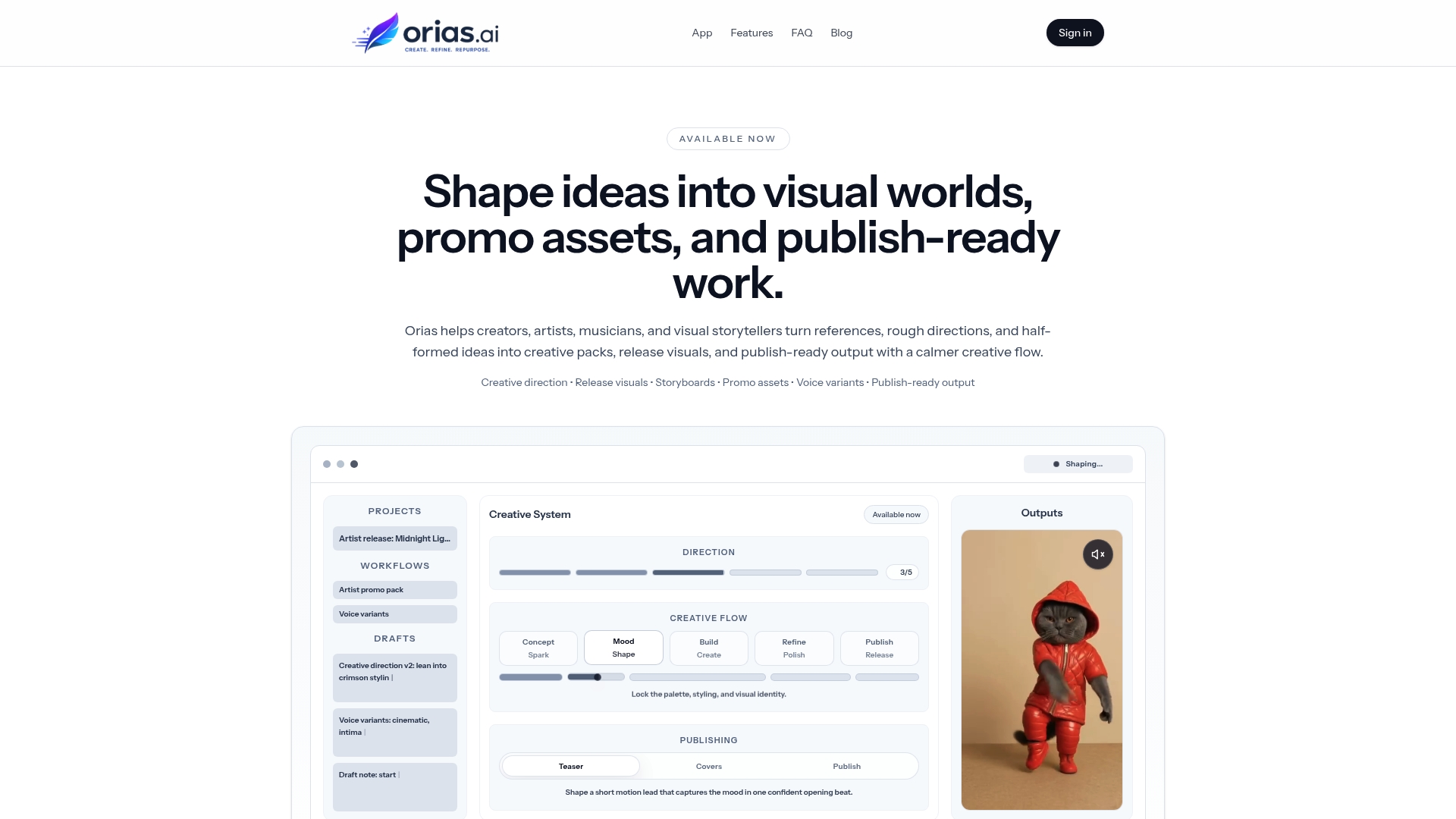
Whether you’re mapping out a teaser sequence, generating variant visuals for different platforms, or building out a complete campaign creative pack, the Orias AI workspace gives you a focused, iterative environment to move from concept to output fast. You get the visual consistency and campaign clarity that phased rollouts demand, with far less manual effort than traditional creative workflows require. Your next release deserves a campaign built for it, not assembled at the last minute.
Frequently asked questions
What is the most effective way to build pre-save engagement for a new release?
Phased campaigns using pre-saves paired with email and SMS capture consistently outperform single-day release promotions by converting casual attention into owned audience contacts before launch day.
How important are visuals in release campaigns?
Campaigns built on strong visual storytelling can see up to 94% more views than text-only content, and cohesive visual worlds significantly increase fan retention and organic sharing.
What kind of assets should be included in a layered campaign strategy?
A well-rounded campaign uses a mix of short-form video, static images, infographics, interactive email sequences, and story content, all anchored by a central visual motif or theme for consistency.
Are multi-stage release campaigns only for major artists?
Not at all. The Black Country, New Road campaign shows that phased tactics including teasers, pre-saves, and post-launch storytelling can generate 400K streams and 120% list growth for independent artists operating without major label support.