Music branding essentials: Build a standout artist identity
Unlock your potential with music branding essentials! Learn how to create a standout artist identity and engage fans effectively. Start branding today!
TL;DR:
- Branding is essential for artists to build recognition and fan loyalty beyond talent.
- Consistent visual, verbal, and sonic signals across platforms create a cohesive brand identity.
- AI tools can streamline asset creation but should support, not define, the artist’s core vision.
Talent alone does not guarantee a following. Only 1% of artists generate 90% of all streams, while the vast majority of independent musicians stay invisible despite releasing quality music. The gap is rarely about skill. It is almost always about branding. Most artists treat branding as a visual afterthought, something to sort out after the music is done. But branding is the framework that shapes how fans perceive you before they even press play. This guide walks you through the foundational elements of music branding, how to align them across platforms, how AI tools can speed up your workflow, and what common mistakes to avoid.
Table of Contents
- Understanding the building blocks of music branding
- Aligning visual, sonic, and verbal identity
- Leveraging AI tools for creative asset production
- Avoiding common music branding pitfalls
- What most guides miss about music branding
- Power up your branding with Orias AI
- Frequently asked questions
Key Takeaways
| Point | Details |
|---|---|
| Branding is holistic | Your music brand is a combination of visual, sonic, and verbal identity elements working together. |
| Consistency matters most | Aligning every asset and release around a central theme builds recognition and trust with fans. |
| Use AI for efficiency | AI tools can help you create and manage assets faster, freeing up time for creative work. |
| Beware of common pitfalls | Avoid rebranding too often and focus on what makes your music unique to stand out authentically. |
| Compound your impact | Long-term, consistent branding across platforms delivers better growth than chasing trends. |
Understanding the building blocks of music branding
With the importance of branding established, let’s break down the specific components you’ll need to get right.
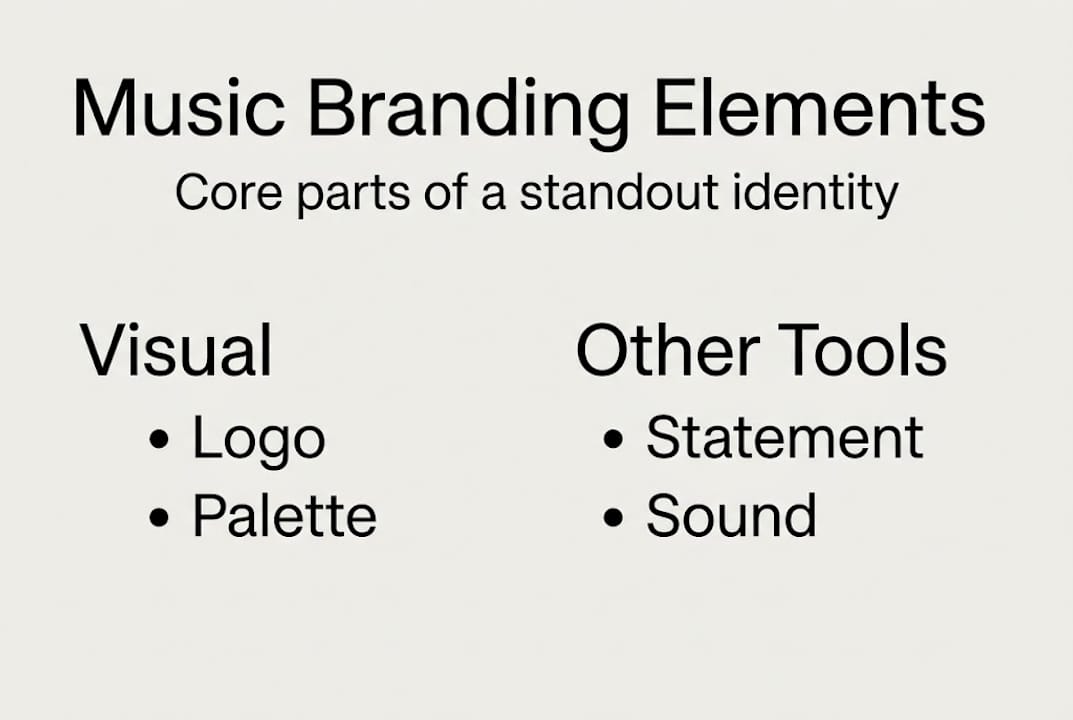
Music branding is not just a logo or a color palette, though those matter. It is the full system of signals that tells the world who you are as an artist. According to music branding principles for independent artists, the core components include your visual identity, your artist statement, and your sonic signature. Each of these works together to create a coherent picture that fans can recognize across platforms, releases, and live settings.
Visual identity is typically the first place artists start, and for good reason. Visuals are processed faster than text and create immediate impressions. The practical starting point is choosing a palette of two to three colors that reflect the emotional tone of your music. A dark, moody artist might choose deep burgundy, near-black, and pale gold, while an upbeat pop act might use pastels or bright neons. Alongside color, select one to two font styles, one for headers and one for body text, and stick with them across everything. This consistency builds recognition without requiring fans to consciously notice it.
Your artist statement is the verbal anchor of your brand. It should be three to five sentences that clearly state what you make, who it is for, and why it matters. Think of it as your internal brand compass rather than a press bio. When you know your statement well, every caption, interview answer, and playlist pitch will feel coherent and grounded.
Sonic branding is often overlooked, but it is just as important as visuals. Consistency in vocal production style, instrument palette, and tempo range creates a signature sound that fans learn to recognize before the chorus even hits. Artists like Bon Iver and Billie Eilish have built sonic identities so distinct that listeners can identify them within seconds. You do not need to repeat yourself creatively, but a consistent sonic thread ties your catalog together.
To help you see how these elements compare in function, here is a quick overview:
| Branding element | Primary function | Key tools |
|---|---|---|
| Visual identity | First impression and platform recognition | Color palette, fonts, photography style |
| Artist statement | Verbal clarity and internal brand alignment | Written bio, elevator pitch |
| Sonic signature | Catalog cohesion and listener recognition | Production style, instrument choices |
Pro Tip: Before designing anything, write down three adjectives you want fans to feel when they encounter your brand. Let those adjectives guide every visual and verbal decision you make.
If you want to go deeper on the visual side, the guide on how to build a magnetic visual identity for musicians is a great next resource. You can also browse creative branding workflows for broader inspiration across the full creative process.
Aligning visual, sonic, and verbal identity
After identifying the key components of your brand, the next step is making sure all those elements work together everywhere your audience meets your music.

Knowing your brand elements in isolation is only half the work. The real challenge is applying them consistently across every touchpoint. Strong music branding requires starting from the emotional core of your music, translating that emotion into visuals and verbal messaging, and then applying it consistently on every platform where fans encounter you.
Start by auditing what you already have. Pull together your Spotify artist profile, your Instagram grid, your website homepage, and any merch or press materials. Ask yourself: if a new fan stumbled across each one separately, would they recognize they belong to the same artist? If the answer is no, you have an alignment problem worth solving.
Here is a practical process for getting everything in sync:
- Define your emotional core. What feeling does your music create? Melancholy and introspection? Euphoria and liberation? Energy and rebellion? Write it down clearly, because this is what drives every other decision.
- Map each brand element to that emotion. Your color palette, font style, photo editing approach, caption tone, and press language should all reflect that same emotional territory. An ambient electronic artist who writes clinical, detached captions is sending mixed signals.
- Apply your brand across Spotify, social platforms, your website, and merch. Your Spotify header and artist photo should match the same visual era as your current Instagram feed. Your website should feel like an extension of both. Merch is often inconsistent because it involves a separate production process, but it should still reflect the same color and design logic.
- Create a simple brand guidelines document. This does not need to be a 40-page brand manual. A one-page reference with your colors listed as hex codes, your fonts, your approved photo filters or editing styles, and two or three examples of your caption tone is enough to keep everything on track.
- Review alignment every time you release. Each release is a branding moment. Before anything goes live, check it against your guidelines.
“Brand consistency is not about looking identical everywhere. It is about creating family resemblance, a sense that all your creative assets share a common origin.”
This distinction matters a lot in practice. An artist who uses exactly the same template for every post can start to feel repetitive and mechanical. Family resemblance, on the other hand, allows for creative variation while maintaining a clear visual and emotional thread. You can see this principle in action with artists who shift their visual direction between albums but still feel unmistakably themselves.
For more ideas on applying these principles to specific releases, the article on visual tips for music releases is worth your time.
Leveraging AI tools for creative asset production
Having established a framework for brand alignment, let’s explore how AI tools can make the asset creation process easier and more effective.
One of the most consistent challenges for independent artists is that branding requires ongoing creative output. You need graphics for every release, captions for every post, bios updated for every pitch, and promo assets ready for every campaign. This volume of work can slow everything down, especially when you are also focused on making music.
AI tools have changed that equation meaningfully. AI-assisted platforms like Canva, Adobe Express, and ChatGPT can boost content engagement by up to 30%, and the time savings alone can justify building them into your workflow. Here is how to use each category effectively:
For visual assets:
- Canva is ideal for creating brand kits. You can store your colors, fonts, and logo in one place and apply them to templates instantly. This makes producing consistent graphics much faster than starting from scratch.
- Adobe Express offers similar functionality with tighter integration into the Adobe ecosystem, which is useful if you already use Photoshop or Lightroom for your photo editing.
For written content:
- ChatGPT or Claude can help you write bios in different lengths, short for Spotify, longer for press releases, draft caption variations for the same post, and build elevator pitches for playlist curators or booking agents. Feed them your artist statement and ask for outputs in your specific tone.
- These tools work best when you give them clear input. A vague prompt produces generic output. The more specific you are about your sound, your audience, and your tone, the more useful the result.
One important caution: Avoid using Midjourney, DALL-E, or similar image generators for final release artwork or press photos. Beyond the copyright ambiguity around training data, AI-generated art tends to lack the authentic specificity that resonates with dedicated fans. Use it for mood boards, ideation, and internal references, but let actual artwork reflect real creative intent.
Pro Tip: Use AI to handle the repetitive 20% of your content workflow, caption drafts, bio variations, resize exports, so you can stay focused on the 80% that requires your actual creative judgment.
You can dig into specific caption strategies with AI and broader AI creative best practices to build out a workflow that fits your release schedule.
Avoiding common music branding pitfalls
Even with the right tools and frameworks, artists can still fall into common traps, so here is what to look out for.
Getting the foundations right is meaningful progress. But even artists who understand their brand can undermine their own work through predictable mistakes. Knowing what these look like in practice helps you catch them before they cost you.
The most common pitfalls include:
- Over-refreshing your brand identity. Changing your visual direction every six months prevents fans from forming a clear mental image of who you are. Refreshing your brand every two to three years is the better rhythm. A strategic rebrand can feel exciting and intentional. Constant changes just feel chaotic.
- Inconsistency across platforms. When your Spotify profile looks nothing like your Instagram, fans who discover you in one place may not recognize you in another. This fragmentation also affects how algorithms surface your content, since platform signals rely on consistent metadata and audience behavior patterns.
- Ignoring your unique selling proposition, USP. Your USP is the specific combination of factors that makes you different from every other artist in your genre. Without a defined USP, your brand is forgettable by default. Spend real time identifying it. What do you do that nobody else does exactly the same way?
- Relying on fabricated personas. Some artists build brands around aesthetics or identities that do not reflect who they actually are, betting that a compelling image will carry them further than authenticity. It rarely works long term. Fans are perceptive, and inconsistency and USP neglect are the most common reasons artists stall out even after an early push.
- Focusing only on visuals while neglecting the full picture. A beautiful Instagram grid is not a brand. If your sound, your captions, and your live presence tell completely different stories, the visual work is wasted.
“Authentic branding compounds. Every consistent signal you put out reinforces the last one, building a body of recognition that is hard to replicate and harder to undo.”
The practical fix for most of these problems is to build your brand guidelines document early and use it as a filter before anything goes public. It sounds simple because it is, but most artists skip it.
For more on how promo visuals can strengthen your brand signals across releases, the piece on promo visuals and creator engagement is a good reference point.
What most guides miss about music branding
Most branding guides for musicians focus on tactics: which colors to choose, how to write a bio, what tools to use. Those tactics are useful, and this article covers them for a reason. But the thing that actually separates artists who build lasting careers from those who plateau is something harder to measure: compounding consistency.
Brand recognition does not spike after one good campaign. It builds slowly through repeated exposure to aligned signals. Every release, post, interview, and visual that reflects the same emotional core adds another layer of recognition. Aligning sonic, visual, and verbal branding compounds over time and supports sustainable fan growth, even more than short-term numerical wins. That is a fundamentally different way of thinking about branding than chasing a viral moment.
The artists who get this right are not the ones who perfectly execute a single rebrand. They are the ones who commit to a direction and build on it release after release, letting the body of work do the heavy lifting. Perfectionism and trend-following are both traps. Waiting until your branding is perfect before releasing, or pivoting your entire identity because something is trending, disrupts the very compounding effect that makes branding work.
AI tools are genuinely useful for making this process more efficient. But they work best when your creative vision is already clear. Use them to execute, not to decide. The identity must come from you, and the storytelling techniques you build around that identity should feel true to where your music actually lives.
The goal is not a perfect brand document. The goal is a clear, consistent point of view that fans can learn to recognize and trust over time.
Power up your branding with Orias AI
If you’re ready to streamline your creative workflows, powerful tools are within reach.
Building a consistent artist brand takes ongoing creative output, and that output takes time. That is exactly where Orias AI fits in.
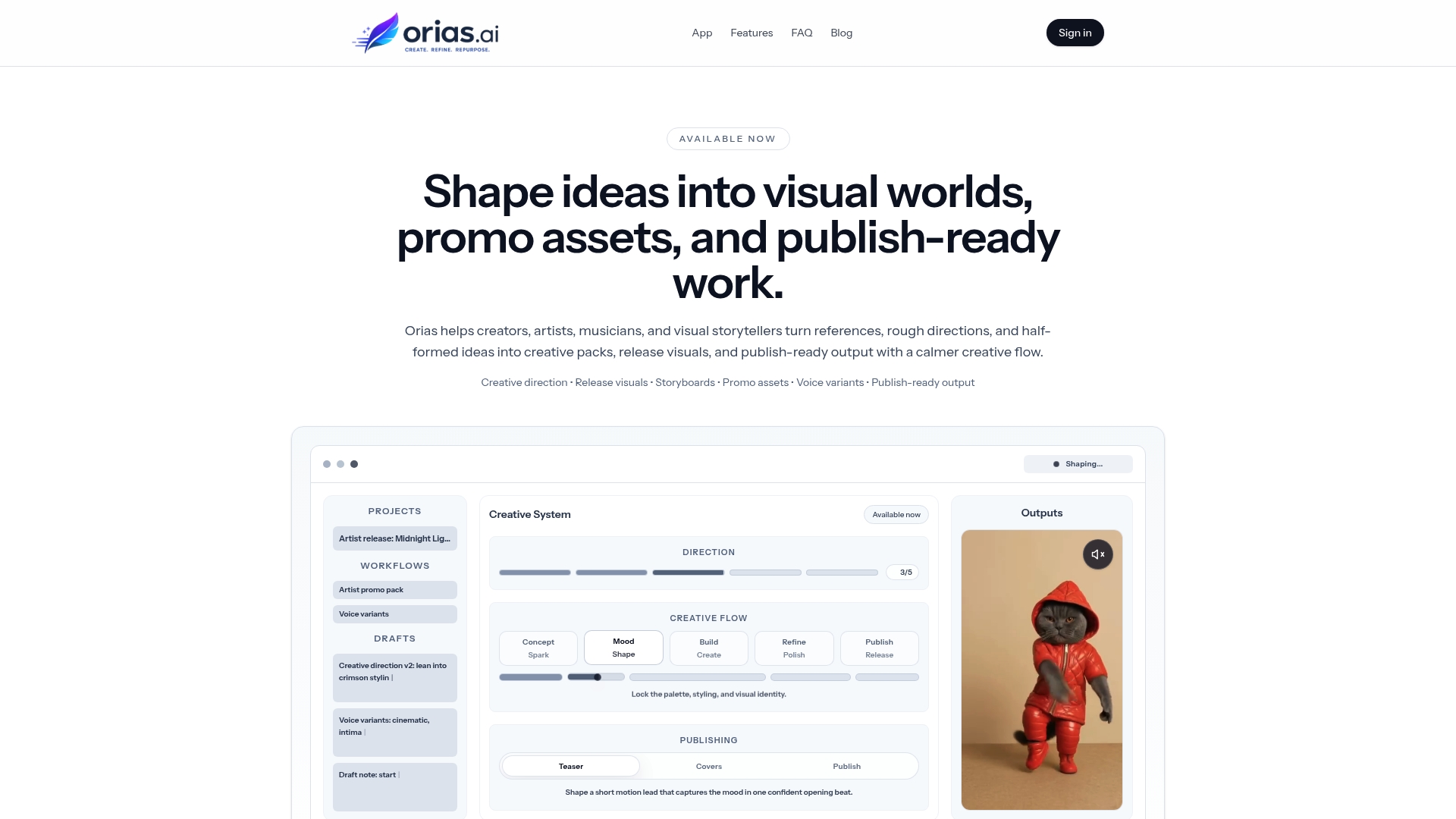
The Orias AI creative workspace is built for musicians and independent artists who want to move from concept to publish-ready assets without the usual back-and-forth. You can shape your visual direction, generate promo assets, refine your messaging, and export full creative packs, all within a focused, iterative workflow designed to reduce overthinking. If you are still working on the visual side of your identity, the guide on building a magnetic visual identity pairs well with what the platform offers. Consistency gets a lot easier when your tools are built for it.
Frequently asked questions
How often should I update my music branding?
Refreshing your brand every two to three years keeps things feeling current without disrupting the recognition you have built. Avoid major changes too frequently, as over-refreshing can damage how fans identify you across platforms.
Can AI fully create my artist brand for me?
AI can generate assets and drafts, but your core creative identity needs to stay human-driven. AI works best for operational and support tasks, not for defining the vision that makes your brand distinctly yours.
What are recommended benchmarks for social engagement as an artist?
Aim for an Instagram engagement rate of 3 to 6% and a monthly follower growth rate of 10 to 25% for steady, sustainable progress. These numbers give you a realistic target without chasing inflated vanity metrics.
What’s the biggest mistake artists make with branding?
Inconsistency and USP neglect are the two most common branding mistakes. When your platforms tell different stories and you have not defined what makes you distinct, even strong music struggles to build a loyal following.