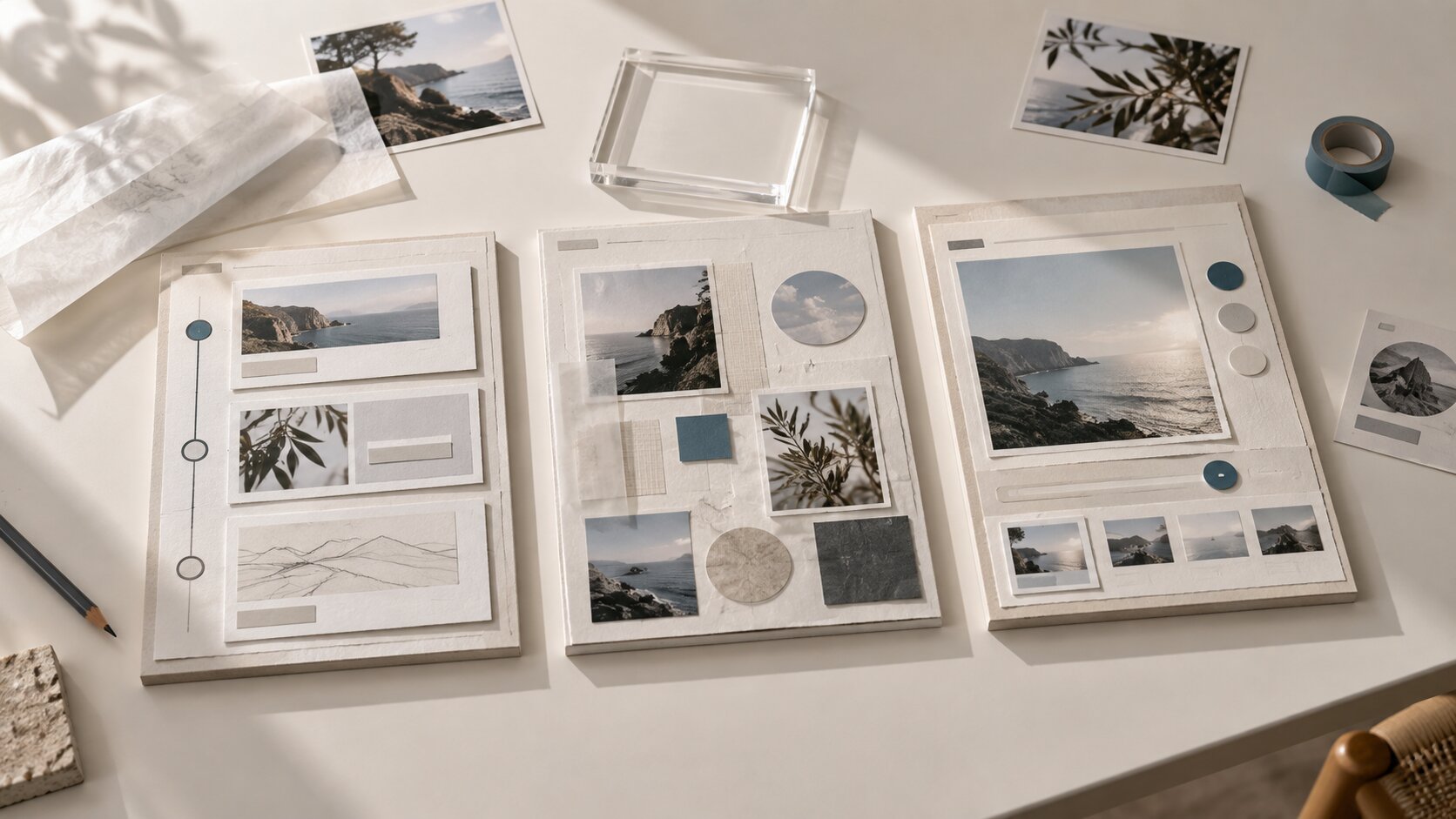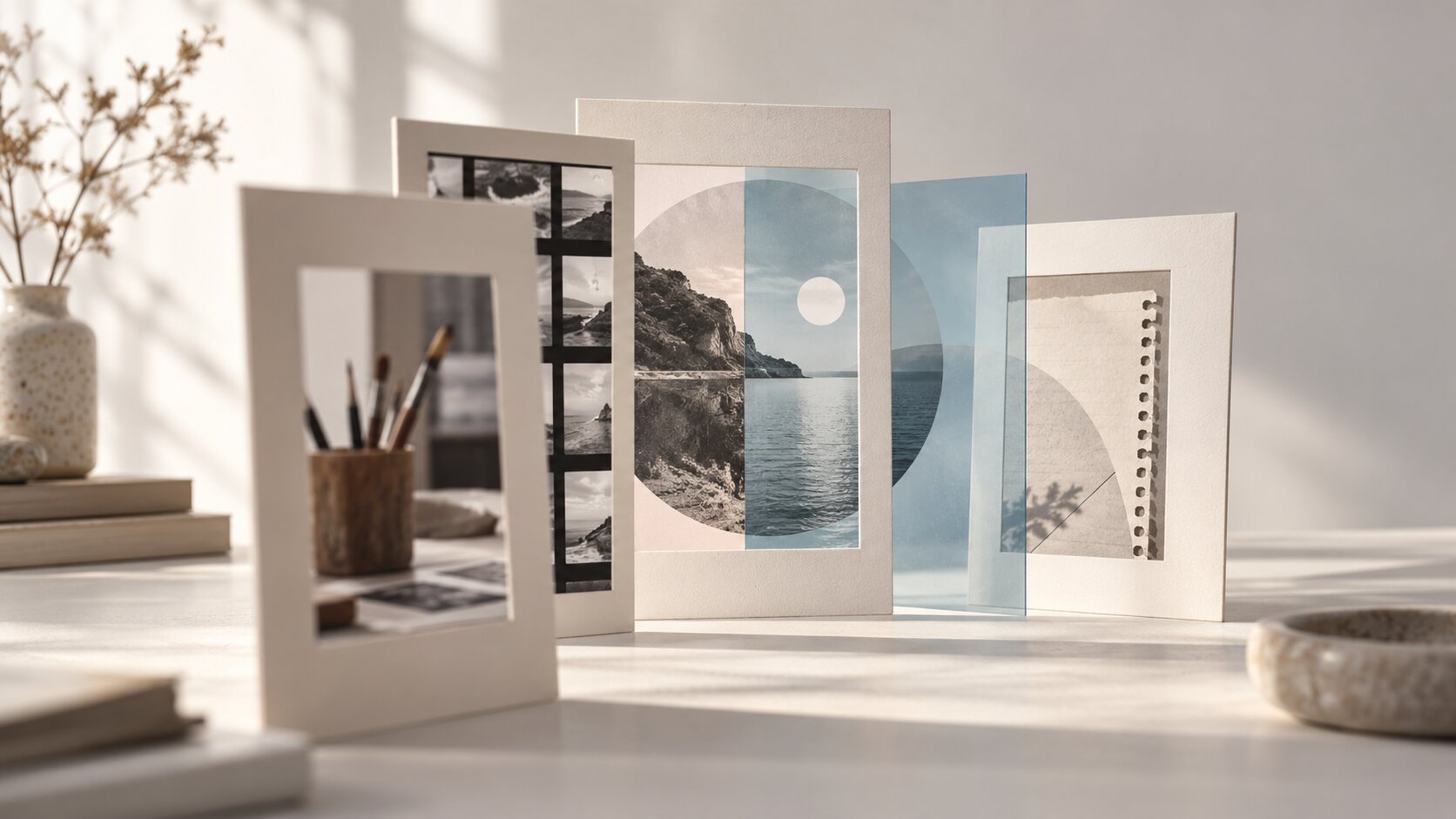
How to Create a Strong Brand Point of View Before Making Content
Define a clear brand point of view before creating posts, visuals, release assets, campaigns or AI-generated content.

TL;DR:
- A strong brand point of view is the creative and strategic lens that explains what you believe, how you see your audience’s world, and why your content should exist.
- Before making posts, videos, release visuals, or AI-generated assets, define your POV in plain language and translate it into visual and verbal rules.
- The goal is not to sound louder; it is to become easier to recognize, trust, and remember.
Most content problems do not begin at the editing stage. They begin earlier, when a creator starts producing without knowing what the work is supposed to stand for.
That is why so many feeds feel visually busy but emotionally unclear. A musician may have strong songs but inconsistent release visuals. A creator may post often but struggle to explain what connects the work. A visual storyteller may have good references, but no clear reason why one image, format, or campaign idea belongs to them.
A brand point of view solves this before production starts. It gives your content a direction before you choose the camera angle, prompt, caption, layout, or platform format. This matters even more when using AI tools, because AI can generate many options quickly, but it cannot decide what your work should mean for you.
This guide will help artists, musicians, creators, and creative teams define a practical brand POV, turn it into visual and editorial rules, and use it to make stronger content without losing the human taste behind the work.
Table of Contents
- What a Brand Point of View Actually Does
- Find the Tension Your Brand Wants to Speak Into
- Build a One-Page POV Brief Before You Make Anything
- Translate the POV Into Visual Direction
- Turn Your POV Into Content Decisions
- Use AI to Explore the POV, Not Replace It
- Stress-Test the POV Across Platforms
- Keep a Rejection System
- How Orias AI Supports POV-Led Creative Work
- Frequently Asked Questions
Key Takeaways
| Point | Details |
|---|---|
| A brand POV is not a slogan | It is the belief system and creative lens that shapes what you say, show, reject, and repeat. |
| POV should come before production | Without it, posts, visuals, AI prompts, and campaign assets often feel disconnected. |
| The strongest POVs answer a tension | Good content speaks into something the audience feels, questions, wants, resists, or misunderstands. |
| Visual consistency starts with direction | Colors and fonts help, but mood, framing, rhythm, texture, and subject matter matter just as much. |
| AI needs a creative filter | AI can generate variations, but human judgment should decide what feels true, original, and on-brand. |
| A POV must survive platform changes | The format can change between TikTok, YouTube, Spotify, Instagram, and a website; the underlying viewpoint should remain recognizable. |
What a Brand Point of View Actually Does
A brand point of view is the position your creative work takes on the world around it.
For a musician, it might be a belief about loneliness, nightlife, identity, rebellion, tenderness, or transformation. For a visual creator, it might be a belief about how stories should look and feel. For a creative team, it might be a clear stance on what their audience needs to understand, feel, or question.
A POV is not the same as a niche. A niche tells people what category you are in. A POV tells people why your work feels different inside that category.
A niche says:
“I make cinematic visuals for independent artists.”
A POV says:
“Independent artists do not need cheaper versions of major-label campaigns. They need visual worlds that make small releases feel emotionally complete.”
That second version gives you creative direction. It suggests a tone, a visual style, a content strategy, and a way to talk to the audience.
A strong POV usually affects four things:
- What you talk about
- What you refuse to talk about
- How your content feels
- How people recognize your work over time
The mistake is treating POV as a branding exercise that lives in a document and never touches production. A useful POV should influence captions, thumbnails, release visuals, short-form hooks, website hero sections, email campaigns, behind-the-scenes posts, AI prompts, and final asset selection.
Find the Tension Your Brand Wants to Speak Into
A weak POV often starts with self-description:
“I am a multidisciplinary creator making content about creativity.”
That may be accurate, but it does not create tension. Stronger POVs usually begin with something unresolved in the audience’s world.
For example:
- “Creators are told to post constantly, but constant output often weakens the work.”
- “Independent musicians are pressured to look polished before they have a clear visual identity.”
- “AI makes content faster, but speed without direction creates sameness.”
- “Visual storytelling is often treated as decoration, when it should carry the emotional structure of the campaign.”
Each of these statements creates a point of view because it names a problem and implies a belief.
A practical tension-finding exercise
Before making content, write short answers to these prompts:
| Prompt | Example |
|---|---|
| What does your audience want? | To create more consistent release visuals without hiring a full creative team. |
| What are they tired of? | Generic AI images, rushed promo posts, and content that looks like everyone else’s. |
| What do they misunderstand? | They think consistency means repeating the same design, not building a flexible visual system. |
| What do you believe instead? | Consistency comes from creative direction before production. |
| What should your content help them do? | Turn rough ideas into a clear visual world and usable promo assets. |
The result is not a final tagline. It is a strategic center of gravity.
“We believe [specific belief], because [audience tension], so our content helps people [practical result].”
Example:
“We believe creative consistency starts before content production, because creators are overwhelmed by formats and tools, so our content helps them turn raw ideas into structured visual systems.”
That sentence can guide a blog article, a carousel, a launch campaign, a prompt workflow, a YouTube intro, or a product page.
Build a One-Page POV Brief Before You Make Anything
A brand POV becomes useful when it is short enough to apply. Do not start with a 40-page brand deck. Start with a one-page brief that can sit next to your content calendar, AI prompt system, or campaign plan.
The five-part POV brief
1. Core belief
Write the main belief behind your creative work.
- “A strong visual identity should feel like a world, not a logo system.”
- “AI should expand creative options, not erase human taste.”
- “Release visuals should help listeners enter the emotional atmosphere of a song.”
Avoid vague beliefs such as “creativity matters” or “content should be authentic.” They are too broad to guide decisions.
2. Audience tension
Name the pressure your audience feels.
For creators and musicians, this might include:
- Too many platforms to feed
- Pressure to look professional
- Inconsistent visuals
- Limited budget
- Confusing AI tools
- Difficulty turning ideas into campaigns
- Fear of becoming generic
The more specific the tension, the easier it becomes to make content that feels relevant.
3. Creative promise
Define what your content consistently helps people do.
“We help creators turn scattered ideas into clear visual direction, campaign assets, and publish-ready creative systems.”
This is not just a marketing line. It becomes a production filter. A post that does not support the promise may still be interesting, but it may not belong in the main content system.
4. Tone boundaries
Describe how your brand should and should not sound.
| We sound like | We do not sound like |
|---|---|
| Clear, editorial, practical | Hype-driven or vague |
| Creative but structured | Random or overly abstract |
| Experienced and human | Robotic or over-polished |
| Strategic | Trend-chasing |
Tone boundaries are especially useful when multiple people or AI tools help produce content.
5. Visual world
Define the sensory direction of the brand.
Include:
- Mood
- Lighting
- Color behavior
- Texture
- Composition
- Motion style
- Human presence
- Level of polish
- What to avoid
For example:
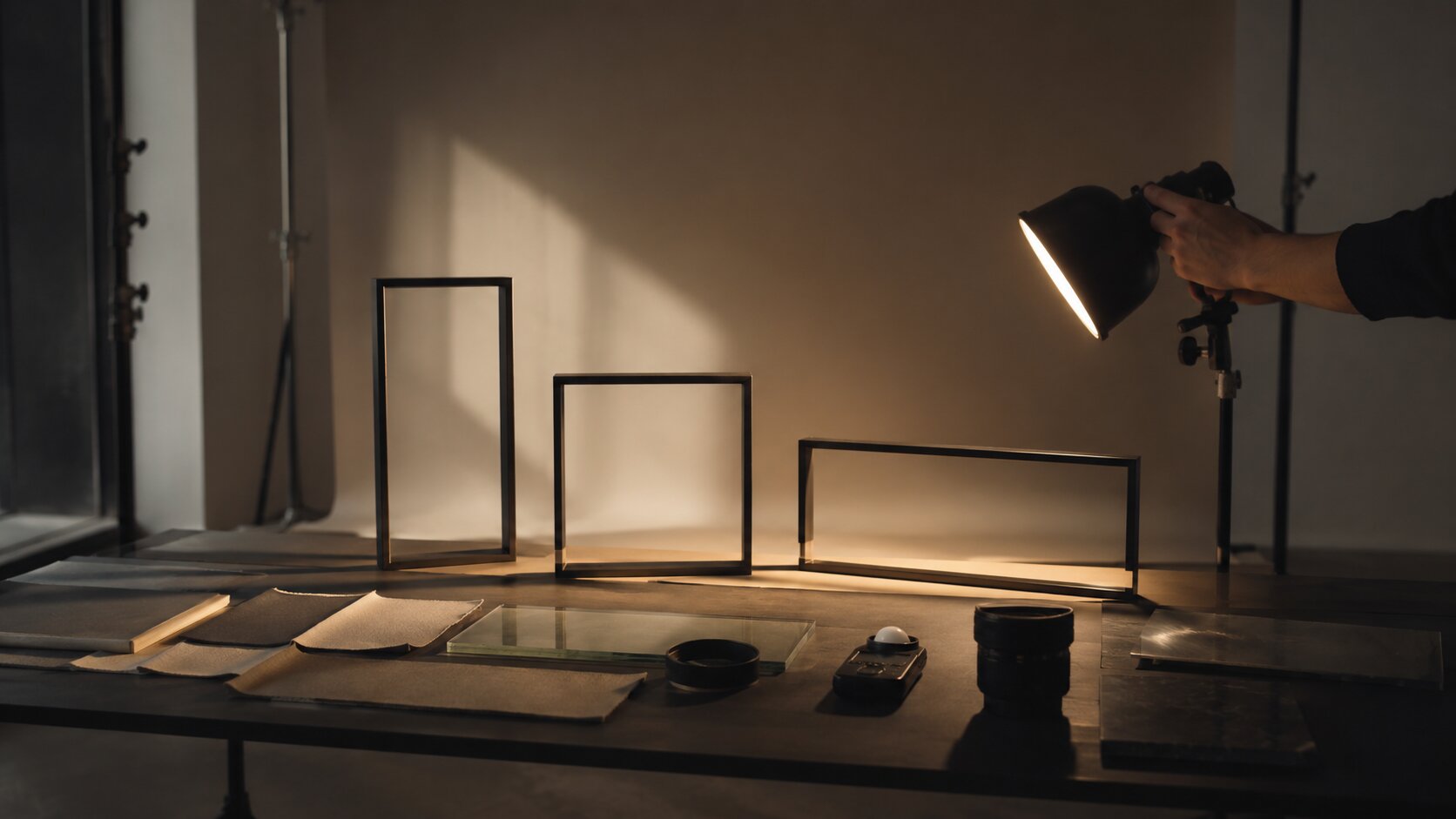
“Dark editorial studio atmosphere, soft practical lighting, tactile materials, cinematic shadows, restrained color, human hands, creative tools, no futuristic robot clichés, no fake UI text, no glossy generic AI look.”
This kind of direction is much more useful than simply saying “premium” or “modern.”
Translate the POV Into Visual Direction
A brand POV should not stay verbal. If it is real, it should affect what people see.
For artists and musicians, this is especially important because the audience often experiences the brand visually before they read a caption. Spotify for Artists describes an artist profile as a key first impression and highlights tools such as videos, profile customization, merch, tickets, and pre-release promotion as part of the artist’s public presence.
Your visual direction should answer: What does our point of view look like?
From belief to image system
If your belief is:
“Creative work should feel human even when AI is involved.”
Then your visual rules might be:
- Show hands, work surfaces, notes, cameras, instruments, screens, and imperfect drafts.
- Use tactile materials instead of clean floating holograms.
- Keep AI visible through process, variation, and exploration, not through robot imagery.
- Favor final human selection over endless automated output.
- Avoid visuals that imply the tool is the artist.
If your belief is:
“A music release should feel like a complete world.”
Your visual rules might be:
- Create a consistent atmosphere across cover art, short visual loops, teasers, banners, and social crops.
- Repeat lighting, color temperature, texture, and framing.
- Adapt each asset to its format instead of resizing one master image everywhere.
- Treat the release as a campaign, not a single post.
Spotify’s Canvas guidance is a useful reminder that platform-specific visuals need creative restraint: short looping visuals should avoid rapid cuts, flashing graphics, and important action near edges that may be cropped on some phones.
Build a “yes / no” visual board
Instead of making only a mood board, create a decision board:
| Yes | No |
|---|---|
| Low light, soft shadows, close human detail | Neon cyber clichés |
| Physical creative tools | Abstract AI clouds |
| Campaign systems across formats | One-off images |
| Imperfect drafts and selection moments | Perfect but empty compositions |
| Visual restraint | Overloaded effects |
This gives you a practical filter for AI generation, design review, photography, video direction, and asset repurposing.
Turn Your POV Into Content Decisions
Once your POV is clear, it should make content planning easier.
Instead of asking, “What should we post today?” ask:
“What does our audience need to understand through our point of view?”
That shift creates more strategic content.
Use four content roles
A strong POV can usually produce four types of content.
| Content Role | Purpose | Example |
|---|---|---|
| Belief content | States what you stand for | “More assets do not equal a stronger campaign.” |
| Teaching content | Helps the audience apply the belief | “How to turn one release concept into five visual formats.” |
| Proof content | Shows the belief in action | Before/after creative direction breakdowns. |
| Process content | Reveals how the work gets made | Prompt refinement, mood exploration, final curation. |
For creators, this prevents content from becoming random. For teams, it helps distribute production across different formats while keeping the same strategic spine.
Example for an independent musician
POV:
“My music lives between tenderness and tension.”
Content decisions:
- Visuals should balance softness and unease.
- Captions should feel intimate, not promotional.
- Behind-the-scenes posts can show quiet studio moments instead of loud hype.
- Release teasers should use fragments, shadows, textures, and emotional cues.
- AI-generated assets should be judged by mood accuracy, not visual complexity.
Example for a creator education brand
POV:
“Creative consistency comes from systems, not constant inspiration.”
Content decisions:
- Tutorials should show repeatable workflows.
- Visuals should include frameworks, stages, and organized creative materials.
- Social posts should avoid vague motivation.
- AI prompts should be presented as part of a broader creative process.
- Case studies should show how one idea becomes many assets.
The result is not rigid content. It is flexible content with a recognizable center.
Use AI to Explore the POV, Not Replace It
AI is useful when you already know what you are trying to explore. It is much less useful when you expect it to invent your identity for you.
For POV-led creative work, AI can help with:
- Turning rough ideas into clearer creative territories
- Generating mood directions
- Exploring visual variations
- Drafting content angles
- Creating campaign asset lists
- Testing different tones of voice
- Repurposing one concept into multiple platform formats
- Building prompt systems for consistent output
But AI should not make the final taste decision. It does not know what feels true to your lived context, your artistic history, your audience relationship, or your long-term brand.
This is where many creators go wrong. They prompt for “cinematic,” “premium,” or “viral” before defining what those words mean for their own work. The output may look polished, but it often feels interchangeable.
A better AI workflow for brand POV
Use this sequence:
- Write the POV brief
- Generate creative territories
- Select one direction
- Create visual rules
- Generate asset variations
- Reject anything that does not match the POV
- Refine selected assets manually
- Adapt for each platform
- Review after publishing
The key is that AI enters after the point of view exists.
Prompt example
Use a prompt like this:
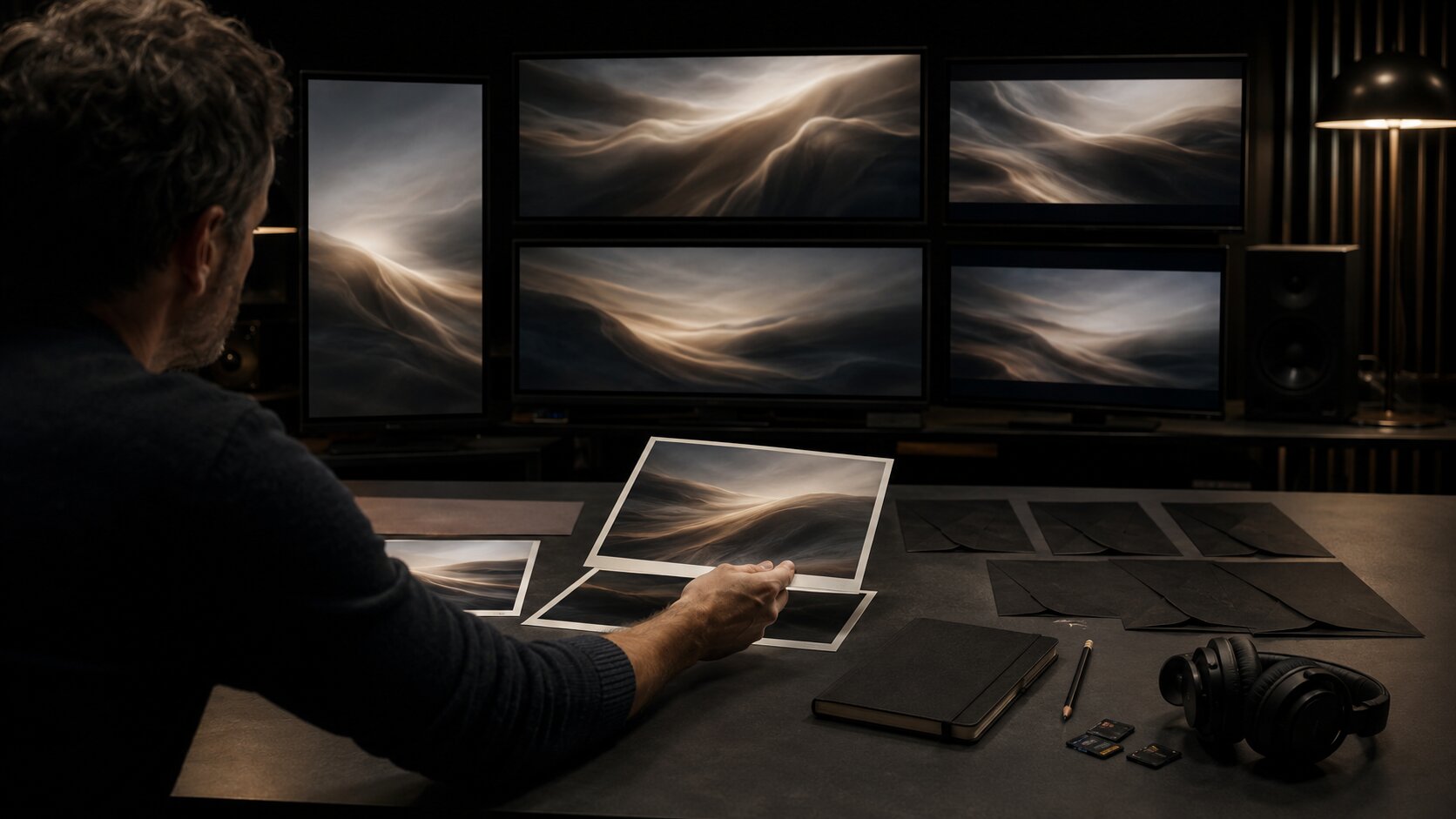
“Based on this brand point of view, generate three distinct visual directions for a music release campaign. Each direction should include mood, lighting, color behavior, texture, subject matter, motion style, and what to avoid. Do not create generic futuristic AI aesthetics. Keep the artist’s emotional world central.”
Then judge the output against your POV brief.
A useful AI result is not the one that looks most impressive. It is the one that gives you the clearest creative path.
Stress-Test the POV Across Platforms
A brand POV is only strong if it survives different formats.
TikTok, YouTube, Instagram, Spotify, websites, email, and paid ads all have different behaviors. That does not mean your POV should change every time. It means the expression should adapt.
Platform adaptation table
| Platform / Asset | POV Question | Practical Adaptation |
|---|---|---|
| TikTok / Reels / Shorts | Can the belief appear quickly? | Use a direct hook, native pacing, and visual clarity. |
| YouTube | Can the POV sustain a longer idea? | Build titles, thumbnails, intros, and structure around the core belief. |
| Spotify artist profile | Does the visual world support the music? | Align profile imagery, short visuals, release assets, and bio tone. |
| Instagram carousel | Can the POV become a teachable sequence? | Break the idea into frames with one clear thought per slide. |
| Website hero | Does the POV become positioning? | Use the belief to clarify who the brand helps and why it matters. |
| Does the POV create trust? | Speak with context, not just promotion. |
The mistake is copying the same asset everywhere. The stronger approach is to preserve the point of view while changing the container.
Keep a Rejection System
A point of view becomes real when it helps you say no.
Without rejection rules, every trend, prompt, asset, and caption can seem usable. That is how brand identity becomes diluted.
Create a simple rejection checklist:
- Does this asset express our belief?
- Does it fit the audience tension we speak into?
- Does it look like our visual world?
- Does the tone match our boundaries?
- Would this still make sense without the trend attached?
- Is the idea clear without overexplaining?
- Does this feel like us, or just like the tool?
This is especially important with AI-generated content. More options can create the illusion of better strategy. In reality, more options only help when you have a strong filter.
Your brand kit should not only include colors and logos. It should include beliefs, language rules, visual references, prompt rules, rejected clichés, and examples of what good output looks like.
How Orias AI Supports POV-Led Creative Work
Orias AI is built for creators, artists, musicians, and visual storytellers who need more than random outputs. A strong brand point of view needs a workflow: rough ideas, references, moods, campaign concepts, visual directions, asset variations, refinement, and publish-ready creative packs.
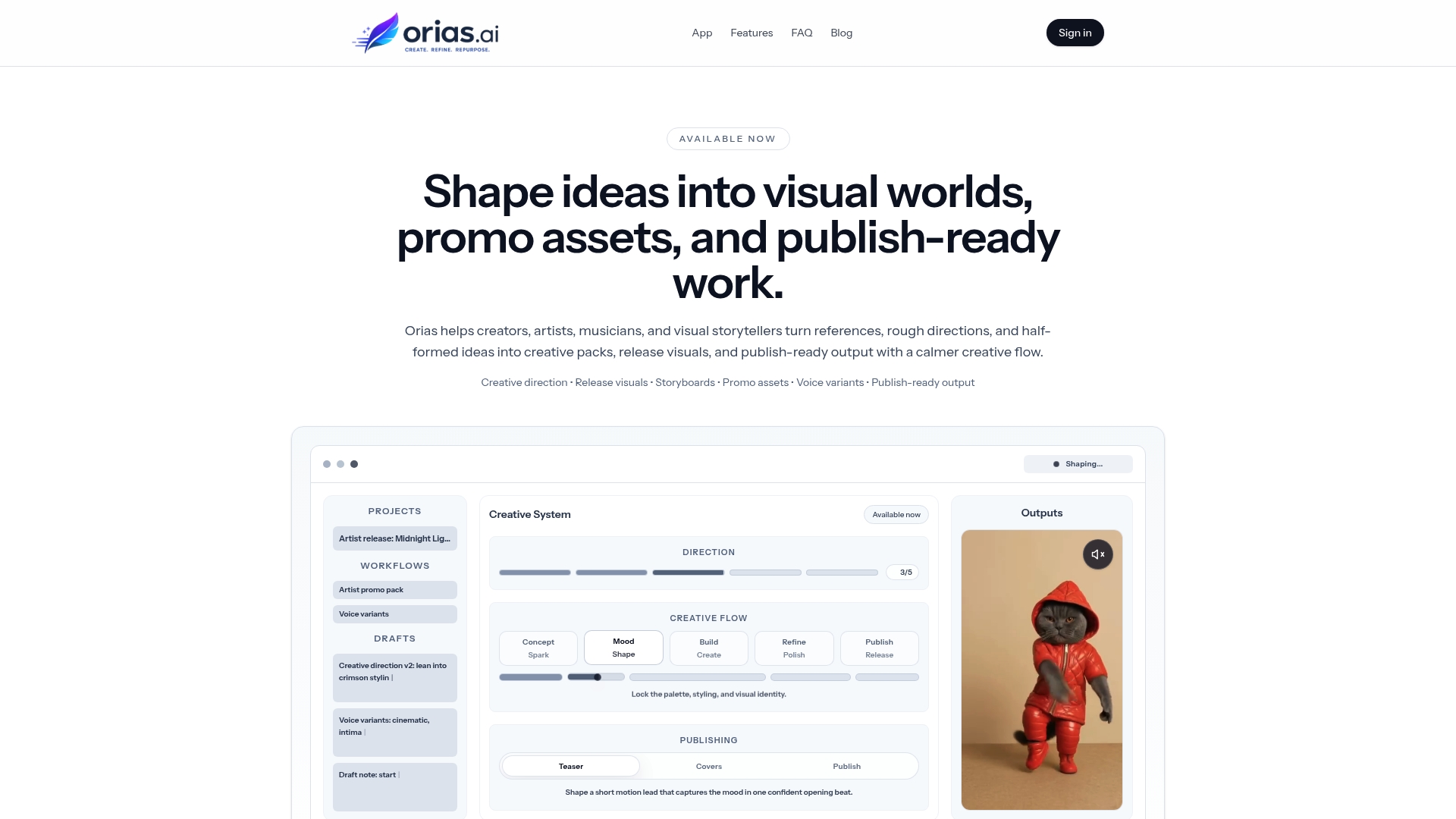
That is where Orias AI fits naturally. Instead of starting with disconnected prompts, creators can use Orias AI to clarify the creative world behind a project, explore visual directions, shape promo assets, develop release visuals, create campaign materials, and keep outputs aligned with the original idea.
The best use of AI is not to replace your voice. It is to help you build enough structure around your voice that the work becomes easier to produce, adapt, and recognize.
Frequently Asked Questions
What is a brand point of view?
A brand point of view is the belief, perspective, or creative stance that shapes how your brand communicates. It explains what you stand for, what problem or tension you speak into, and how your audience should experience your content.
How is a brand POV different from brand voice?
Brand voice is how you sound. Brand POV is what you believe and how you interpret the world. Voice is part of the POV, but the POV also affects visuals, content themes, campaign concepts, platform choices, and creative rules.
Do independent artists really need a brand point of view?
Yes, especially if they are releasing music, visuals, merch, videos, or social content across multiple platforms. A POV helps independent artists make consistent creative decisions without needing a large team or expensive brand system.
Can AI help me create a brand point of view?
AI can help you organize thoughts, explore creative territories, generate prompts, and test variations. But the strongest POV should still come from human judgment: your taste, values, audience understanding, artistic context, and long-term goals.
How do I know if my POV is strong enough?
A strong POV helps you make decisions. If it tells you what to post, what to avoid, how to brief visuals, how to write captions, and how to reject off-brand ideas, it is useful. If it sounds nice but does not change production, it needs more specificity.
Should my brand POV stay the same forever?
No. A POV can evolve as your work, audience, and creative goals mature. However, it should not change every week based on trends. Treat it as a stable creative foundation that you review periodically, especially before major campaigns or releases.
What is the biggest mistake creators make when defining their POV?
The biggest mistake is making it too generic. Phrases like “be authentic,” “create value,” or “inspire people” are not specific enough. A useful POV should name a real audience tension and express a belief that can guide content and visual decisions.
Sources Used
- Adobe Creative Trends Report
- Spotify for Artists
- Spotify Canvas Guidelines
- TikTok Business Creative Best Practices
- YouTube Creators
- Canva Brand Kit Best Practices
- Meta Business Ads Guide
Recommended
- Build a Magnetic Visual Identity: A Guide for Musicians - Orias AI
- Boost Creativity: Best Practices for an Efficient Creative Process - Orias AI
- Innovative Visual Storytelling Ideas for Artists and Creators - Orias AI
- AI Creative Workspace for Visual Storytellers, Content Creators and Artists - Orias AI