How to Grow a Real Fanbase as an Independent Musician
Learn how independent musicians can build real fans through identity, release planning, visual storytelling, AI workflows, and direct connection.

TL;DR:
- A real fanbase is built when listeners recognize your sound, understand your world, and feel invited to participate in it.
- Independent musicians should focus less on random visibility and more on repeatable systems: clear identity, consistent visuals, release storytelling, direct fan data, and platform-specific content.
- AI can help speed up ideation and asset creation, but your taste, story, and relationship with listeners are still the core product.
Many independent musicians are told to “post more,” “get on playlists,” or “go viral.” Those things can help, but they do not automatically create a fanbase. A listener can stream your song once, like a reel, or save a TikTok sound without knowing who you are, what you stand for, or why they should come back.
A real fanbase is different. It is made of people who recognize your name, remember your visual world, follow the story around your releases, share your work with friends, buy tickets or merch when they can, and want to be part of your next chapter. That kind of connection matters even more in a market where music discovery is spread across streaming platforms, short-form video, social feeds, live shows, newsletters, and fan communities.
The opportunity is real, but so is the noise. Global recorded music revenues reached US$29.6 billion in 2024, according to IFPI, while paid subscription streaming continued to grow, which means more listening is happening—but also more competition for attention. The goal is not to shout louder than everyone else. The goal is to build a creative system that helps the right people understand and remember you.
This guide explains how to grow a real fanbase as an independent musician by combining artist identity, visual storytelling, release planning, direct fan relationships, platform workflows, and AI-assisted creative systems.
Table of Contents
- Real fans are built through recognition, not reach
- Define the artist world before asking people to join it
- Design a fan journey instead of chasing viral moments
- Turn each release into a narrative campaign
- Use short-form platforms as doors, not the whole house
- Collect signals and direct connections without becoming a data robot
- Make your visuals feel like part of the music
- Let AI speed up the workflow without replacing your taste
- Where Orias AI fits into the fanbase workflow
- Frequently Asked Questions
Key Takeaways
| Point | Details |
|---|---|
| Build memory, not just metrics | A fanbase grows when people repeatedly recognize your sound, visuals, story, and values. |
| Treat every release as a campaign | Plan assets, narratives, platform posts, and fan touchpoints before release week pressure hits. |
| Use platforms for different jobs | TikTok, YouTube Shorts, Spotify, Instagram, email, Bandcamp, and live shows should not all carry the same message. |
| Own some part of the relationship | Social followers are useful, but email, community, merch buyers, and ticket buyers create stronger direct connections. |
| AI should support direction | Use AI for mood exploration, content variants, visual systems, and campaign planning—not as a substitute for artistic judgment. |
| Consistency beats constant reinvention | Your fans should be able to identify your creative world across covers, videos, posts, merch, and live visuals. |
Real fans are built through recognition, not reach
Reach is the number of people who encounter you. Recognition is the number of people who remember you.
Independent musicians often mistake the first for the second. A reel with 100,000 views can feel like progress, but if the viewer cannot name the artist, remember the song, or understand the world behind it, the moment may disappear quickly. Real fanbase growth begins when repeated exposure becomes emotional familiarity.
That familiarity usually comes from four signals:
- A clear sonic identity — what people expect to feel when they press play.
- A visual world — colors, textures, typography, styling, movement, locations, and cover art that feel connected.
- A human story — the emotional or cultural reason people care.
- A participation path — a reason to follow, save, comment, join, buy, attend, remix, or share.
Spotify’s own Fan Study frames this clearly: “the world you build around” music helps keep fans coming back, and the platform connects visuals and storytelling with deeper fan engagement. Spotify also reports that adding or refreshing Canvas can increase off-platform shares by more than 10% on average, and that fans who add an artist to a personal playlist stream more and visit the artist profile more often.
Practical lesson: Do not treat branding as decoration. It is part of how fans remember you.
Define the artist world before asking people to join it
Before building a fanbase, define what people are becoming fans of. Not just the songs—the world.
Your artist world is the creative environment around your music. It can be cinematic, intimate, chaotic, spiritual, romantic, rebellious, nostalgic, futuristic, local, surreal, raw, polished, or something stranger. The important thing is that it is specific.
Build a simple artist world map
| Element | Question to answer | Example direction |
|---|---|---|
| Emotional core | What feeling keeps returning in the music? | Restless hope, romantic dread, late-night confidence |
| Visual language | What should the world look like? | Flash photography, chrome textures, empty streets |
| Character | Who are you in this world? | Confessor, outsider, narrator, provocateur |
| Fan role | What does the audience feel invited into? | A secret, a movement, a diary, a party, a healing space |
| Boundaries | What does not belong? | No generic luxury visuals, no random meme tone, no bright pop palette |
This map makes future decisions easier. Album covers, lyric videos, photoshoots, merch, social posts, show flyers, and AI-generated visual explorations can all be judged against the same direction.

Mistake to avoid: Changing your visual identity every time a new trend appears. Evolution is healthy. Randomness makes you harder to remember.
Design a fan journey instead of chasing viral moments
A viral post is an event. A fan journey is a system.
Think of your audience in stages:
| Stage | What the person thinks | Your job |
|---|---|---|
| Discovery | “This sounds interesting.” | Make the hook clear and memorable. |
| Recognition | “I’ve seen this artist before.” | Repeat visual and narrative signals. |
| Trust | “I understand what they’re about.” | Share process, story, values, and personality. |
| Participation | “I want to support or join in.” | Offer saves, comments, email signup, merch, tickets, community. |
| Advocacy | “Other people should hear this.” | Make sharing easy with strong assets and clear context. |
Each platform can serve a different stage. TikTok and Shorts may support discovery. Spotify and Apple Music help listeners save and revisit. Instagram can deepen visual identity and narrative. Email and community tools can turn casual attention into direct connection. Bandcamp describes itself as both a music marketplace and community where passionate fans discover, connect with, and directly support artists. Its artist guide also notes that community features help drive a meaningful share of sales, but artists still need to tag and present their work properly to be found.
Your job is not to be everywhere equally. Your job is to make each touchpoint lead somewhere.
A simple fan journey for one single
- Short-form video introduces the emotional hook.
- Spotify Canvas or Clip reinforces the visual mood.
- Instagram carousel explains the story behind the song.
- Email gives early supporters a personal note or demo detail.
- Link-in-bio sends fans to streaming, merch, tour dates, or signup.
- Post-release content shows reactions, live versions, alternate visuals, or lyric breakdowns.
This is how one song becomes a world instead of a file.
Turn each release into a narrative campaign
A release should not begin on release day. By then, the strongest fan-building work should already be in motion.
Spotify advises artists to pitch a focus track for playlist consideration at least two weeks before release and prepare details about the story, sound, and playlist fit. The same Spotify release resources encourage artists to use Clips, Canvas, artist profile updates, merch tagging, Artist Pick, and real-time stats around release activity.
For larger projects, Spotify Countdown Pages can bring pre-save activity directly into Spotify. Spotify says artists who publish a Countdown Page at least seven days before release see nearly twice as many pre-saves on average compared with those who publish later, and more than 60% of listeners who pre-save an album stream it during week one.
The four-week independent release map
Four weeks out: define the story. Write one clear sentence: “This song is about…” Then translate that into visuals, captions, short videos, and fan questions.
Three weeks out: build recognition. Post mood-led content: studio clips, reference imagery, lyric fragments, rehearsal moments, and short explanations of the emotional world.
Two weeks out: activate saves and platform setup. Pitch where relevant, update profiles, prepare smart links, create Canvas or short-form loops, and design assets for each platform.
Release week: make it easy to care. Post the strongest hook, the story behind the song, a direct streaming link, and a personal reason the release matters.
Two weeks after: keep the world alive. Share alternate versions, acoustic clips, fan reactions, visualizers, behind-the-scenes edits, live rehearsals, or breakdowns of the lyrics and production.
Pro Tip: Do not spend all your energy announcing that a song is “out now.” Give people a reason to enter the song.
Use short-form platforms as doors, not the whole house
Short-form video is powerful because it can introduce your music to people who were not looking for you. But it should not be the only place your fan relationship exists.
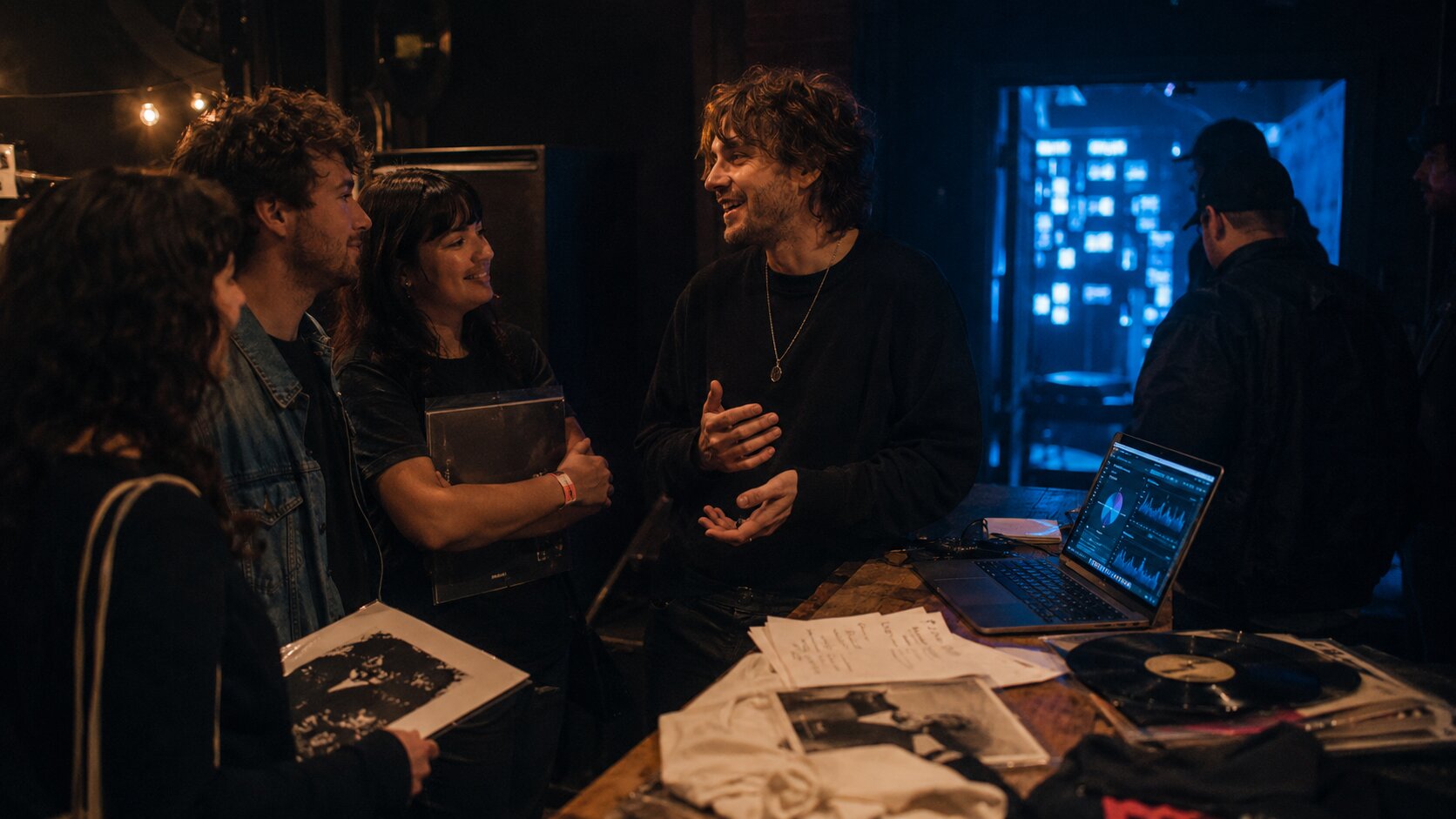
YouTube says Shorts can help artists promote music and build fanbases; its Shorts for Artists resource states that, in January 2024, Shorts featuring an artist’s music tripled the average artist’s unique-viewer reach, and artists posting weekly Shorts saw more than 60% of new subscribers come directly from Shorts posts. TikTok also launched TikTok for Artists globally in June 2025, offering daily-updated dashboards for song performance, post performance, follower insights, and community engagement.
That does not mean every artist should chase the same format. It means short-form platforms should be used intentionally.
Use three types of short-form content
1. Song-first clips. The music is the main event. Use hooks, transitions, live vocals, instrumental moments, or lyric-driven edits.
2. World-building clips. The viewer understands the atmosphere: fashion, locations, lighting, symbols, references, rituals, humor, or recurring characters.
3. Relationship clips. You speak directly to fans: explaining a lyric, responding to a comment, telling a story, showing process, or inviting participation.
Mistake to avoid: Making content that hides the artist. If the song goes viral but nobody connects it to you, the fanbase effect is limited.
Collect signals and direct connections without becoming a data robot
Fan data sounds unromantic, but it helps independent musicians make better decisions. The point is not to reduce fans to numbers. The point is to understand where connection is actually happening.
The MMF Fan Data Guide explains that online interactions can reveal where fans live, what they listen to, how they discover music, what shows they attend, what merch they buy, and how they respond to messages. It also notes that data access varies across platforms and partners, which is why artists should pay attention to what they can directly access.
Track a few practical signals:
- Which songs get saves, playlist adds, comments, or repeat listens?
- Which cities show up in streaming, Shazam, merch, or ticket data?
- Which visual assets get shared?
- Which posts create actual conversation?
- Which links drive people to listen, subscribe, buy, or attend?
- Which fans repeatedly engage?
Then create direct connection points. This can include an email list, SMS list, Discord, Patreon-style membership, Bandcamp following, local show list, or private listening group. You do not need all of them. Start with one channel you can maintain well.
Realistic result: You may not gain huge numbers immediately, but you will learn who is leaning in. Those people are the foundation.
Make your visuals feel like part of the music
For independent musicians, visuals are not optional extras. They are memory devices.
A fan might first encounter your music through a silent autoplay clip, a playlist thumbnail, a cover image, a tour poster, or a reposted Canvas. If those assets feel disconnected, every platform starts from zero. If they feel connected, each touchpoint strengthens recognition.
Apple Music for Artists offers promotional tools for shareable assets, Milestones, social posts, embedded players, and Linkfire links, reinforcing the importance of making releases easy to present and share across channels. Spotify similarly highlights Clips, Canvas, Countdown Pages, artist profiles, merch, concert listings, and audience analytics as parts of an artist’s fan connection toolkit.
Create a visual identity kit
For each release, prepare:
- Cover art direction
- 3–5 colors or tonal references
- Typography direction
- Photo treatment
- Short-form video style
- Canvas or loop concept
- Story post templates
- YouTube thumbnail direction
- Tour or event flyer style
- Merch or limited object concept
This does not require a major budget. It requires decisions.
Pro Tip: Consistency does not mean every asset looks identical. It means every asset feels like it comes from the same artist world.
Let AI speed up the workflow without replacing your taste
AI can be extremely useful for independent musicians because it helps you move from vague ideas to usable creative directions faster. It can help generate mood board options, campaign concepts, visual prompts, content calendars, caption angles, alternate artwork directions, video concepts, and release asset variations.
But AI does not know what is true to you unless you define it. Random prompting often creates generic output because the system has no creative boundary. Strong AI-assisted workflows begin with human direction.
A better AI workflow for fanbase-building
- Start with the song. Write down the lyric themes, emotional tone, sonic references, and audience feeling.
- Build a mood direction. Collect references: films, photos, textures, fashion, locations, typography, colors, lighting, and cultural signals.
- Ask AI for structured variations. Generate multiple visual directions, campaign names, asset lists, or short-form concepts.
- Curate aggressively. Reject anything that feels off-brand, too obvious, too trend-led, or ethically questionable.
- Refine for platform use. Resize, edit, sequence, caption, check rights, and adapt for each channel.
- Review after publishing. Look at engagement, saves, comments, shares, and fan language. Feed those learnings back into the next campaign.
AI is best used as a creative accelerator, not an artistic replacement. Taste still matters. Context still matters. Rights still matter. Final review still matters.
Where Orias AI fits into the fanbase workflow
Orias AI is designed for creators, artists, musicians, and visual storytellers who need to turn rough ideas into clearer creative systems. For an independent musician, that can mean transforming a song mood, lyric fragment, reference folder, or release concept into a stronger visual world.

Instead of treating every asset as a separate task, artists can use Orias AI to shape release visuals, promo assets, campaign materials, voice variants, and publish-ready creative packs around one direction. That helps keep the fan experience consistent across cover art, social posts, visualizers, short-form clips, announcements, and post-release content.
The strongest use case is not “make something for me.” It is “help me clarify the world my fans are entering.”
Frequently Asked Questions
How long does it take to build a real fanbase as an independent musician?
There is no fixed timeline. Some artists build strong local or niche communities quickly, while others grow slowly over multiple releases. The better question is whether more people are recognizing you, returning to your music, engaging directly, and taking meaningful actions such as saving, sharing, joining a list, buying merch, or attending shows.
Do I need to go viral to grow a music fanbase?
No. Virality can create discovery, but it does not guarantee loyalty. A smaller group of repeat listeners, email subscribers, ticket buyers, and active supporters is often more valuable than a large audience that never returns.
What should independent musicians post besides “out now” announcements?
Post the story behind the song, lyric meanings, studio process, rehearsals, visual references, live versions, fan responses, alternate artwork, unfinished demos, and personal context. The goal is to give people reasons to care before and after release day.
How can AI help musicians build a fanbase?
AI can help with mood boards, creative direction, campaign planning, visual concepts, caption variations, release asset systems, and content repurposing. It should not replace your voice, taste, or final judgment. Use it to explore faster, then curate carefully.
What is the biggest mistake indie artists make with social media?
The biggest mistake is treating every post as isolated content instead of part of a larger artist world. If your posts, visuals, songs, captions, and links do not connect, listeners have to work too hard to understand you.
Should I focus on Spotify, TikTok, YouTube, Instagram, or email?
Use each platform for a different role. Short-form platforms are strong for discovery, streaming platforms are essential for listening and saving, Instagram can support identity and relationship-building, YouTube can host deeper video presence, and email or community channels help you maintain direct fan connection.
How do I know if someone is becoming a real fan?
Look for repeat behavior. Real fans save songs, add tracks to playlists, comment more than once, share your work, watch longer videos, join your list, buy something, attend shows, or bring friends into your world.